

Facing HIV Criminalization: What to Know and Where to Start
HIV criminalization continues to affect people across the United States—often regardless of actual risk, scientific evidence, or whether someone is engaged in care. These cases are frequently rooted in fear, misinformation, and interpersonal conflict, rather than public health.
If you are living with HIV and have concerns about potential prosecution, understanding the landscape is an important first step. You are not alone—and support exists.
HIV Criminalization Happens All Over the U.S.
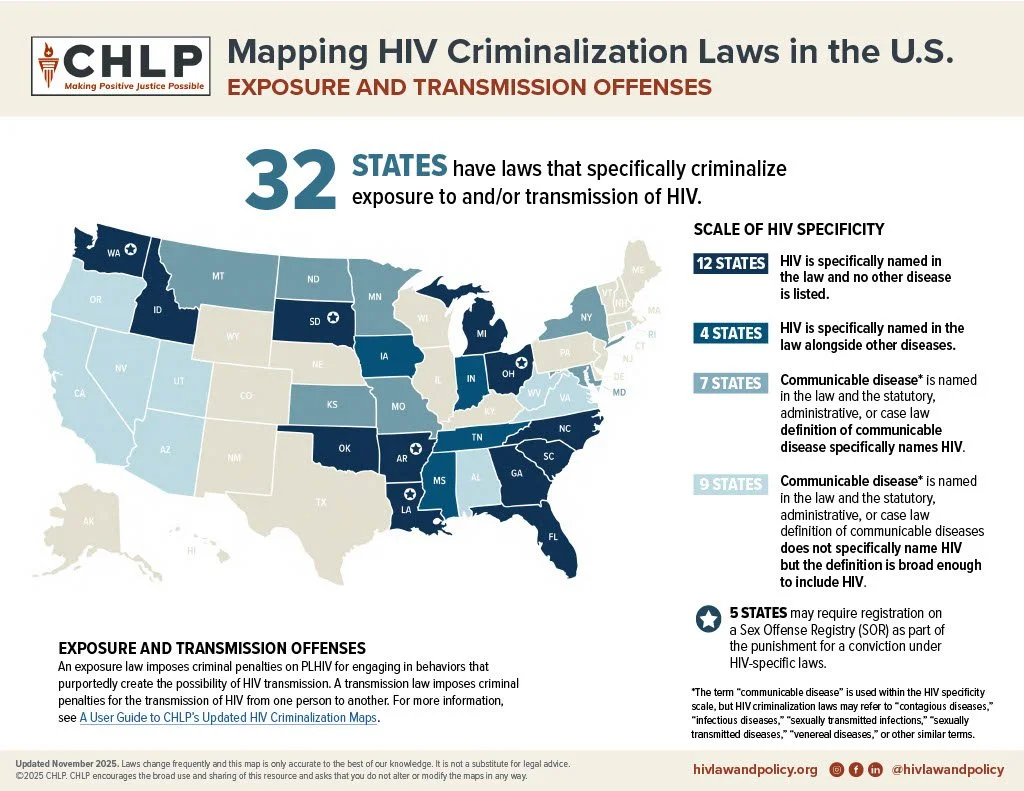
Across the U.S., people living with HIV have been prosecuted under HIV-specific statutes, communicable disease laws, and general criminal laws. Even in states without HIV-specific statutes, prosecutions still occur.
Laws and enforcement practices vary widely by state, and outcomes often depend less on science and more on how these laws are interpreted and applied.
What People Often Get Wrong
Being on treatment or virally suppressed does not always prevent prosecution
Condom use is often ignored in criminal cases
Disclosure alone does not guarantee protection
Many cases proceed without meaningful consideration of HIV science
Understanding these realities helps people make informed decisions and seek appropriate support.
Download: Facing HIV Criminalization - A Practical Resource Guide
If you are concerned about potential HIV-related charges—or have been threatened with prosecution—download the resource brief for practical guidance, support resources, and next steps.
This resource is shared selectively to protect individuals seeking support. If you believe it may be helpful, please reach out to request access.
Legal Disclaimer:
This resource is provided for informational and educational purposes only and does not constitute legal advice. Laws related to HIV disclosure, exposure, and criminal liability vary by jurisdiction and are subject to change. Reading or using this resource does not create an attorney–client relationship. Individuals are encouraged to seek advice from a qualified attorney familiar with HIV-related laws in their state.
